What Does the Battery Warning Light Mean?
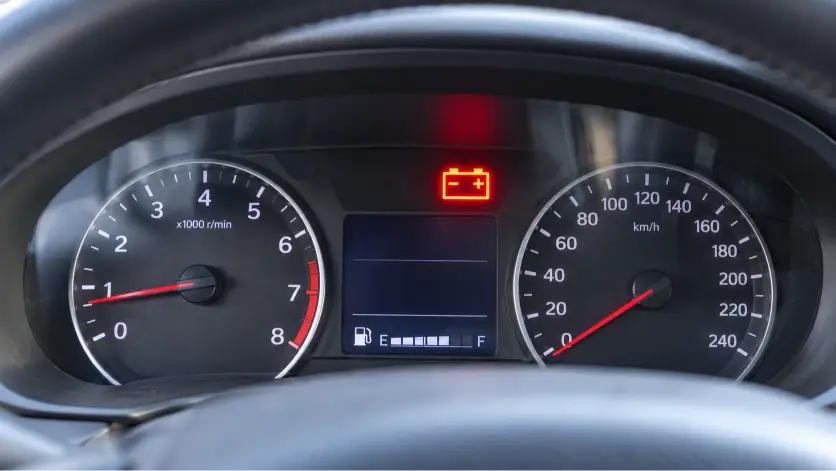
The battery warning light usually indicates a problem with your car’s charging system, not necessarily a bad battery. Possible causes include a failing alternator, a loose or broken drive belt, damaged wiring, or poor electrical connections.
If the light comes on while driving, find a safe place to stop and check your owner’s manual for vehicle-specific instructions. If you notice overheating, smoke, a burning smell, or a broken drive belt, do not continue driving. A charging-system failure can eventually cause the vehicle to stall. This guide explains the common causes, warning signs, diagnostic checks, and next steps for US drivers.
Key points
- The light generally signals a charging-system fault, not necessarily a dead battery.
- Once the engine is running only on battery power, the car may have limited driving time before it stalls.
- A battery light together with overheating, a squealing or missing belt, or dimming lights is a stop-safely situation.
- Symbols, colors, and urgency can vary by vehicle, so check your manual.
What the light looks like
The typical symbol is a small rectangle with a plus (+) and minus (−) sign, resembling a car battery. On most vehicles it is red, though some show it in amber or as a text message such as “Charging System Fault” or “Check Charging System.” Some vehicles also show the message on a driver information display. Because designs differ by make, model, and year, compare the symbol with the warning-light pages in your owner’s manual.
It is normal for the light to appear briefly when you turn the ignition on, as the car runs a bulb check. It should go out shortly after the engine starts. A light that stays on, or comes on while driving, indicates the system has detected a problem.
What to do when the battery light comes on
- Find a safe place to stop. Avoid sudden braking or abrupt maneuvers, and follow your owner’s manual for model-specific instructions.
- Watch for additional warning signs. An overheating gauge, steam, smoke, a burning smell, or a loud belt squeal can indicate a more serious problem. If the temperature gauge is climbing, see common causes of engine overheating.
- Switch off nonessential accessories if it is safe to do so. Air conditioning, seat heaters, the rear defroster, and the stereo add electrical load. Reducing it may help conserve battery power, but it will not repair a charging-system fault.
- Stop the engine once safely parked. If the belt appears broken or missing, or the engine is overheating, do not continue driving. Never inspect moving belts or pulleys.
- Arrange roadside assistance if needed. A failed charging system can cause the vehicle to lose electrical power and stall unexpectedly. Do not assume you have enough battery power to reach a repair shop.

Owner’s manuals differ on exact guidance, so follow your vehicle’s instructions if they are more specific.
Common causes
The following are possibilities, not confirmed diagnoses. The light alone cannot tell you which one applies.
- A failing alternator. The alternator recharges the battery and powers the car’s electrical systems while the engine runs. If it stops producing enough power, the battery supplies the car until it is drained.
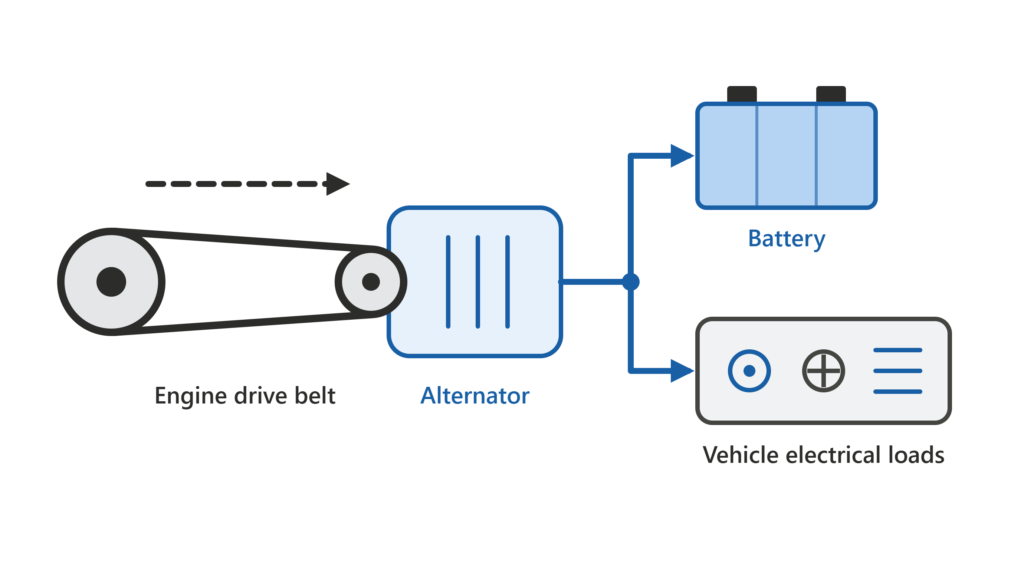
- A loose, worn, or broken drive belt. Many vehicles use a serpentine belt to drive the alternator. On some vehicles, the same belt also drives the water pump, so a belt failure can lead to overheating quickly.
- Corroded or loose battery terminals or cables. Poor connections can interrupt the flow of current in either direction.
- A weak or failing battery. The light signals a fault the charging system detected, and a battery that cannot hold a charge may be involved, but the light alone cannot tell you which part is at fault. A voltage test can show the battery’s condition: see how to test a car battery with a multimeter.
- Wiring, fuse, or ground faults. Damaged wires or a blown fuse in the charging circuit can cause the light to appear.
- A voltage regulator or control module problem. On many vehicles the regulator is built into the alternator or controlled by the vehicle’s computer.
- Other system faults. Newer vehicles, including hybrids and some with start-stop or advanced charging systems, may use the light differently. Check the manual for your specific model.
Can you keep driving?
Treat the light as a reason to stop, not to continue your trip. With a charging fault, the car typically runs on stored battery power until it is depleted. How long that takes depends on the battery’s condition, the electrical load, and the vehicle, so no time or distance is safe for every car. Follow your owner’s manual, which may tell you to stop as soon as it is safe because the engine can stall without warning.
| Situation | Possible explanation | Safer next step |
|---|---|---|
| Light stays on while driving | Charging-system fault | Stop in a safe place and follow your owner’s manual |
| Light with dimming headlights or weak electronics | Low electrical output or a draining battery | Stop safely and arrange assistance |
| Light with an overheating gauge, steam, squealing, or smoke | Possible belt or cooling-system failure | Pull over safely, switch off the engine, and call for help |
| Light flickers or comes on intermittently | Loose connection or intermittent charging fault | Arrange a charging-system inspection |
| Light stays on after a jump-start or new battery | Charging fault, connection, or installation issue | Test the system before replacing more parts |
If the car stalls, do not repeatedly try to restart it in a traffic lane. Move to safety first if you can.
How it is diagnosed
Basic checks you can do safely (engine off and cool):
- Look at the battery terminals for white or blue-green corrosion or visible looseness.
- Check that the drive belt is present and does not look cracked, frayed, or loose. Do not touch the belt or pulleys while the engine is running.
- Refer to the owner’s manual for fuse locations and ratings if you suspect a fuse; do not substitute a different rating.
Professional testing:
A technician can test the battery’s health, measure the charging voltage with the engine running, inspect the belt and connections, and scan for stored trouble codes. Many auto parts stores and repair shops offer a free or low-cost battery and charging-system check, though policies vary. Testing procedures also vary by vehicle, especially on models with smart charging systems or hybrid powertrains, so a technician should follow the manufacturer’s recommended procedure. A test result matters more than the light alone: swapping a battery or alternator without testing often wastes money and may not fix the problem. If the car also struggles to start, see why won’t my car start.
Do not disconnect the battery while the engine is running to “test” the alternator. On modern vehicles this can damage electronic components. If you use a multimeter, follow the instructions in your manual and exercise caution around the engine bay.
How to prevent the issue
There is no guarantee that a charging fault can be prevented, but practical habits may reduce the risk:
- Have the battery tested periodically, especially once it is several years old or you notice slow starts.
- Keep terminals clean and secure.
- Have the drive belt inspected at the intervals your manual recommends, and replace it if it shows wear.
- Address warning lights early instead of waiting until the car fails to start.
Frequently asked questions
Does the battery light mean I need a new battery? Not necessarily. The light points to the charging system as a whole. The battery may be fine while the alternator, belt, or a connection is at fault. A test is the only reliable way to tell.
Can a jump-start fix it? A jump-start may get the engine running, but if the charging system is not working the battery will drain again, sometimes within minutes. Treat a jump as a short-term step to reach a safe stop, not a repair.
Why did the light come on and then go off? It may indicate an intermittent problem, such as a loose connection or a failing alternator that works only some of the time. It is still worth having checked.
Is it the same as the check engine light? No. The battery light is tied to the charging system, while the check engine light relates mainly to engine and emissions controls. Both can appear at the same time if one fault affects another system.
How much will the repair cost? Costs vary widely by vehicle and by the cause, from a simple terminal cleaning to an alternator replacement. Ask for a written estimate that explains the test results.
When to get professional help
See a qualified technician if the light stays on or returns after you restart the car, if you see other warning lights or symptoms, if you are unsure of the cause, or if the car has a hybrid or electric drive system with high-voltage components. Do not attempt work on high-voltage systems without proper training.
Conclusion
The battery warning light usually signals a charging-system problem that needs prompt attention. Stop in a safe place, follow your owner’s manual, and arrange professional testing. If you notice overheating, smoke, or loss of power, switch off the engine when safely parked and call for assistance.
Related guides
- Why won’t my car start?
- How to test a car battery with a multimeter
- Engine overheating: common causes
- How to use an OBD2 scanner
Sources and further reading
- Understand Your Vehicle’s Warning Lights, AAA
- What’s Wrong If My Battery or Charging System Light Comes On?, AAA
- The owner’s manual for your exact make, model, and year (warning-light section)
This article is general information and is not a substitute for the owner’s manual or professional inspection.
Related articles

What Does the Check Engine Light Mean?
The check engine light means your car’s onboard computer has detected a problem with the engine, emissions system, or a related component and has…